
Home / Patient Education
Know Your Knee/Hip Arthritis
From Hell to Heaven — Information guide for hip and knee arthritis & joint replacement.
Understanding Your Knee
What is a Knee Joint?
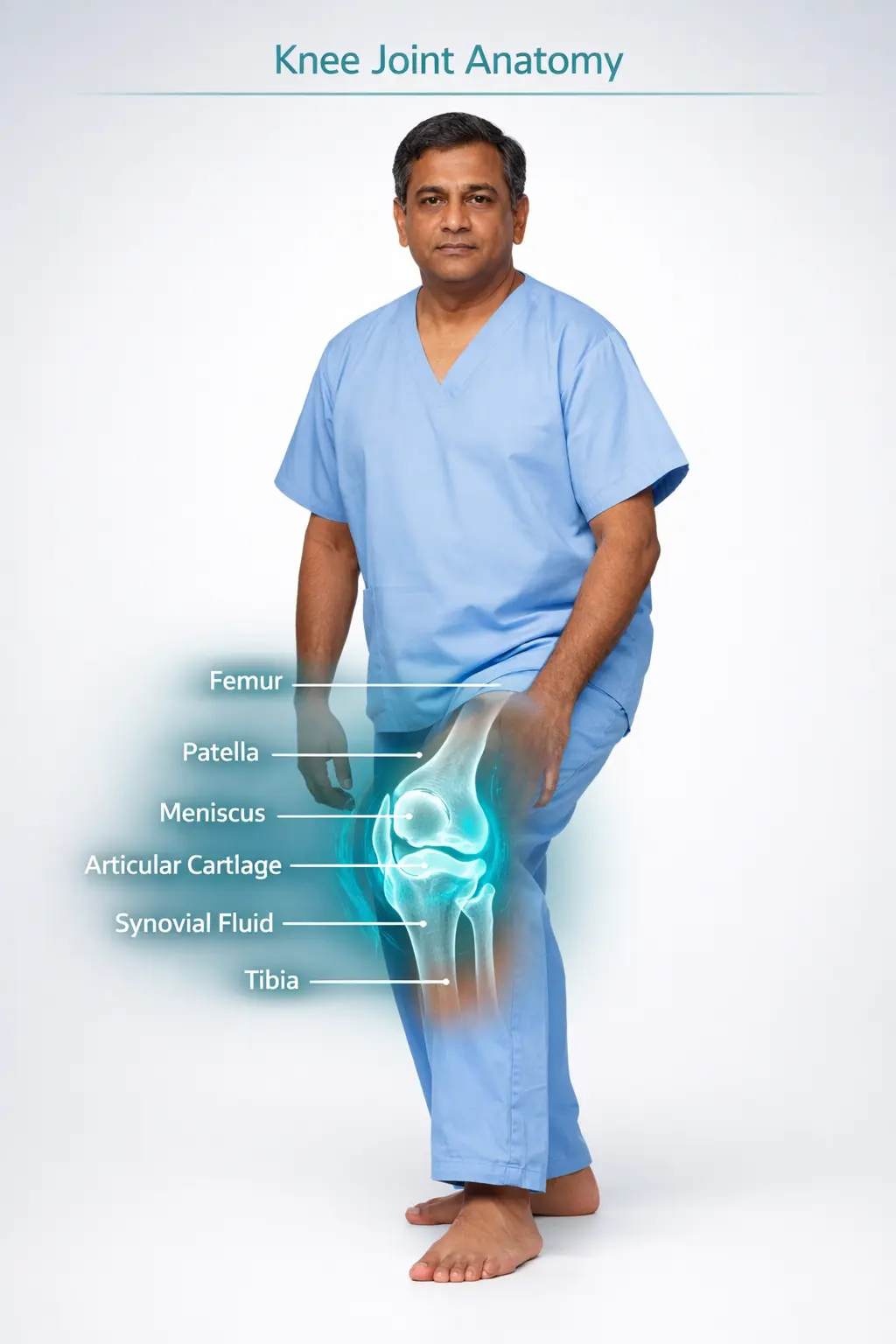
The knee joint is one of the largest and most complex joints in the human body. Understanding its structure helps you appreciate how arthritis develops and what can be done about it.
The knee joint is made up of three bones: the Thigh bone (Femur), the Leg bone (Tibia), and the Cap (Patella).
There is a layer surrounding the joint called the knee joint capsule.
Normal jelly-like lubricant fluid in the joint, known as synovial fluid, keeps everything moving smoothly.
A soft disc/cushion between the two bones called the meniscus acts as a shock absorber.
Synovial lubricating fluid keeps the meniscus wet and slimy, allowing smooth movement of the joint.
Over time with age, synovial fluid reduces, making the meniscus dry and causing friction between the bones.
Grading System
How to Grade Knee Arthritis
Understanding how arthritis progresses helps you take timely action.
The meniscus (soft cushion between the bones) is quite thick to start with. The space between the bone surfaces visible on an X-ray represents the thickness of this meniscus.
Over time, with continuous friction, the meniscus wears down progressively:
When the bones eventually touch each other, there is formation of osteophytes (bony spurs). You can hear a friction sound on bending and straightening the knee. The once-smooth surfaces become rough, causing significant pain.
Clinical & X-ray Signs
Stages of Osteoarthritis Knee
Arthritis progresses through four distinct stages, each with characteristic symptoms and X-ray findings.
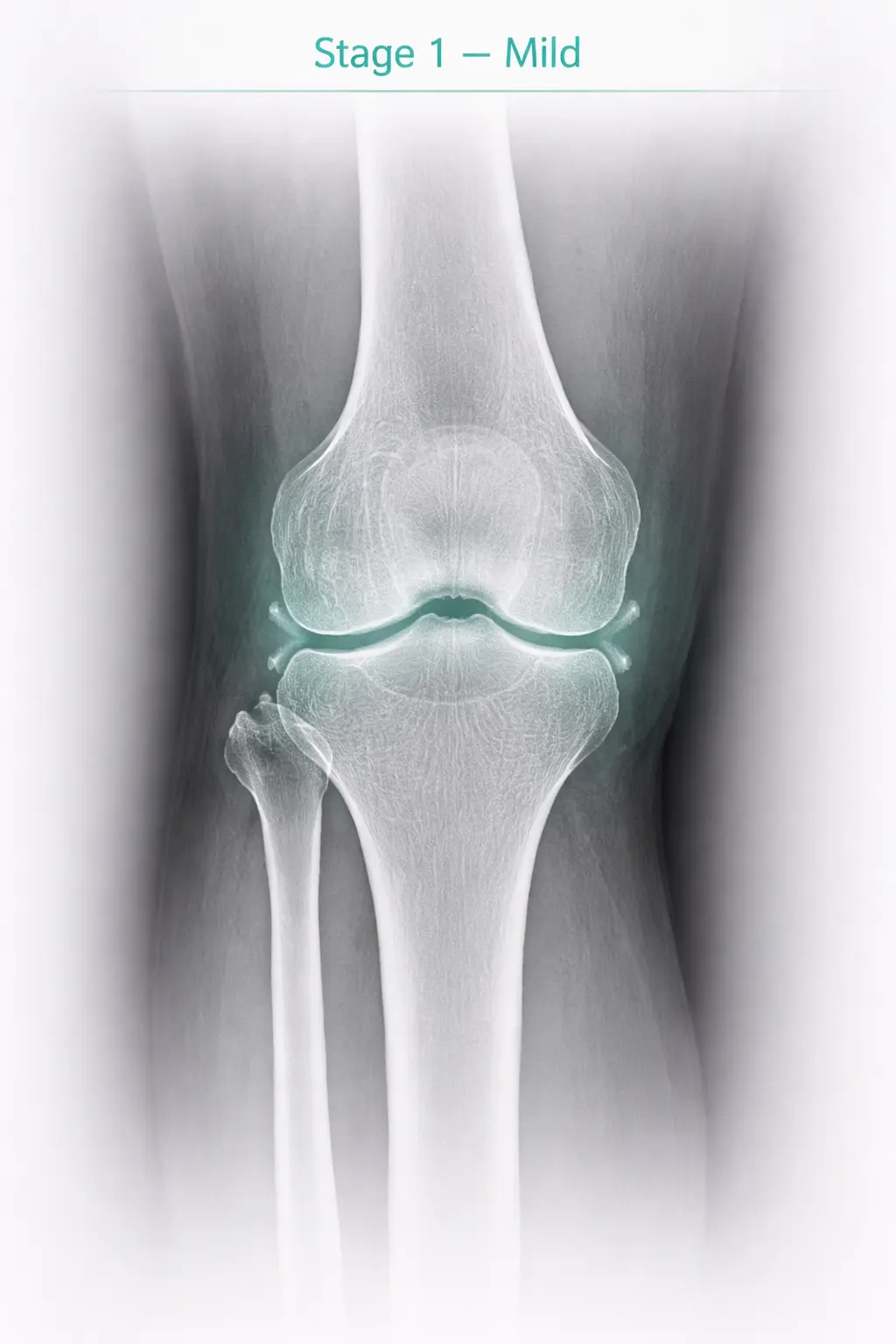
Stage 1
Symptoms
- Pain just started
X-ray Findings
X-ray almost absolutely normal
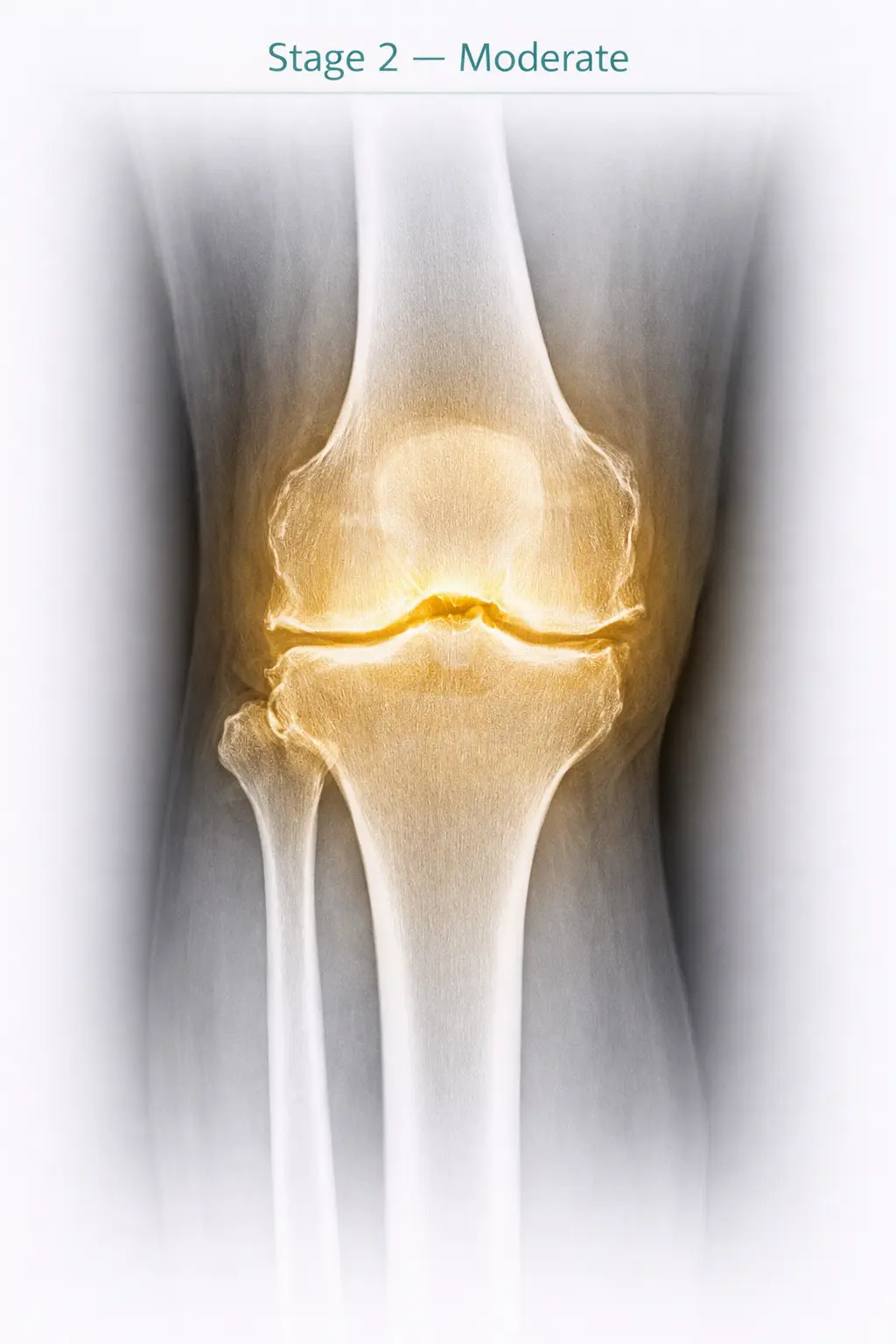
Stage 2
Symptoms
- Pain increases
- Pain on getting up from sitting position
- Difficulty in long distance walking
X-ray Findings
Decreased joint space medially
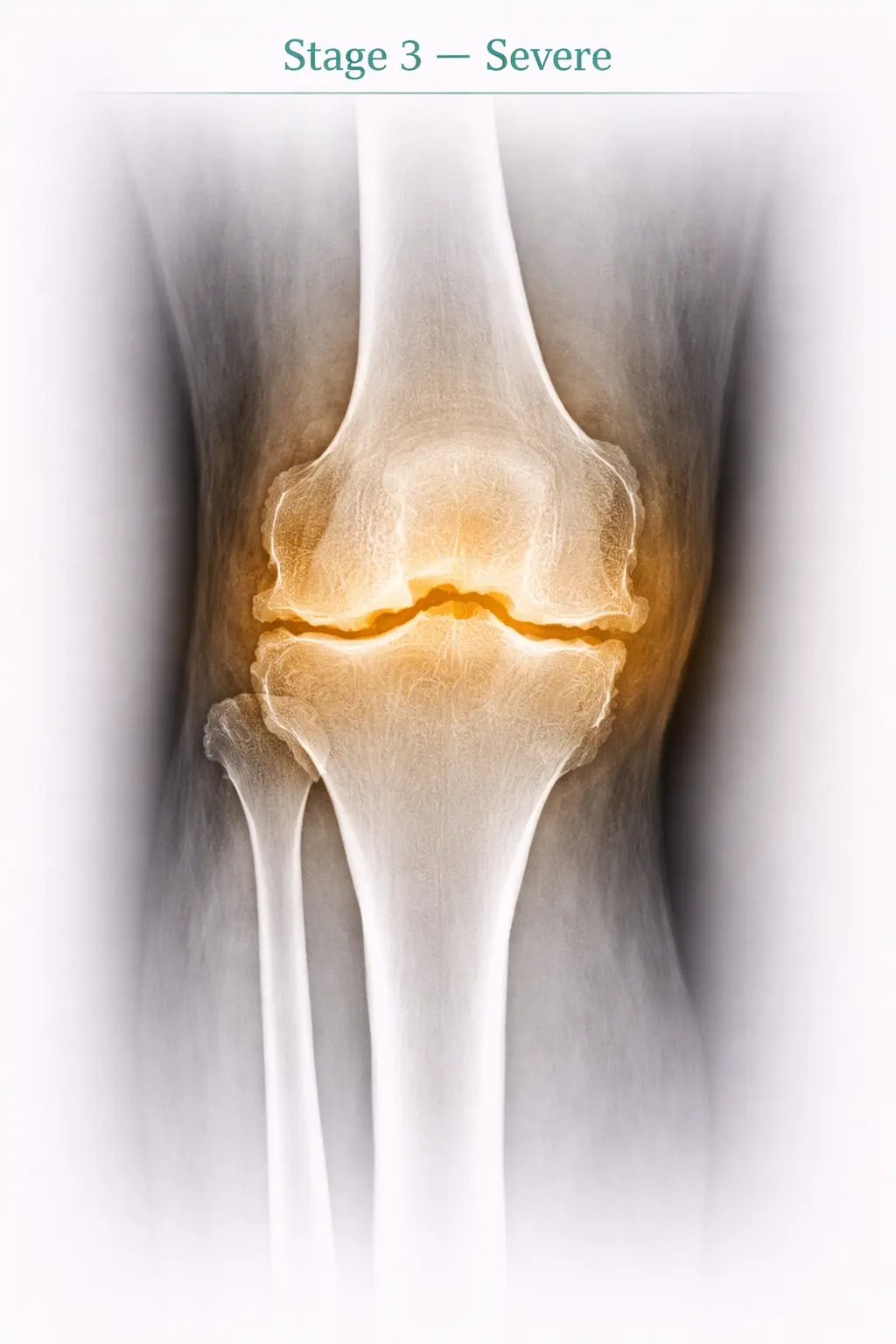
Stage 3
Symptoms
- Difficulty in stair up-down
- Limp while walking
X-ray Findings
- Gross reduction in joint space
- Bone spur (osteophyte formation)
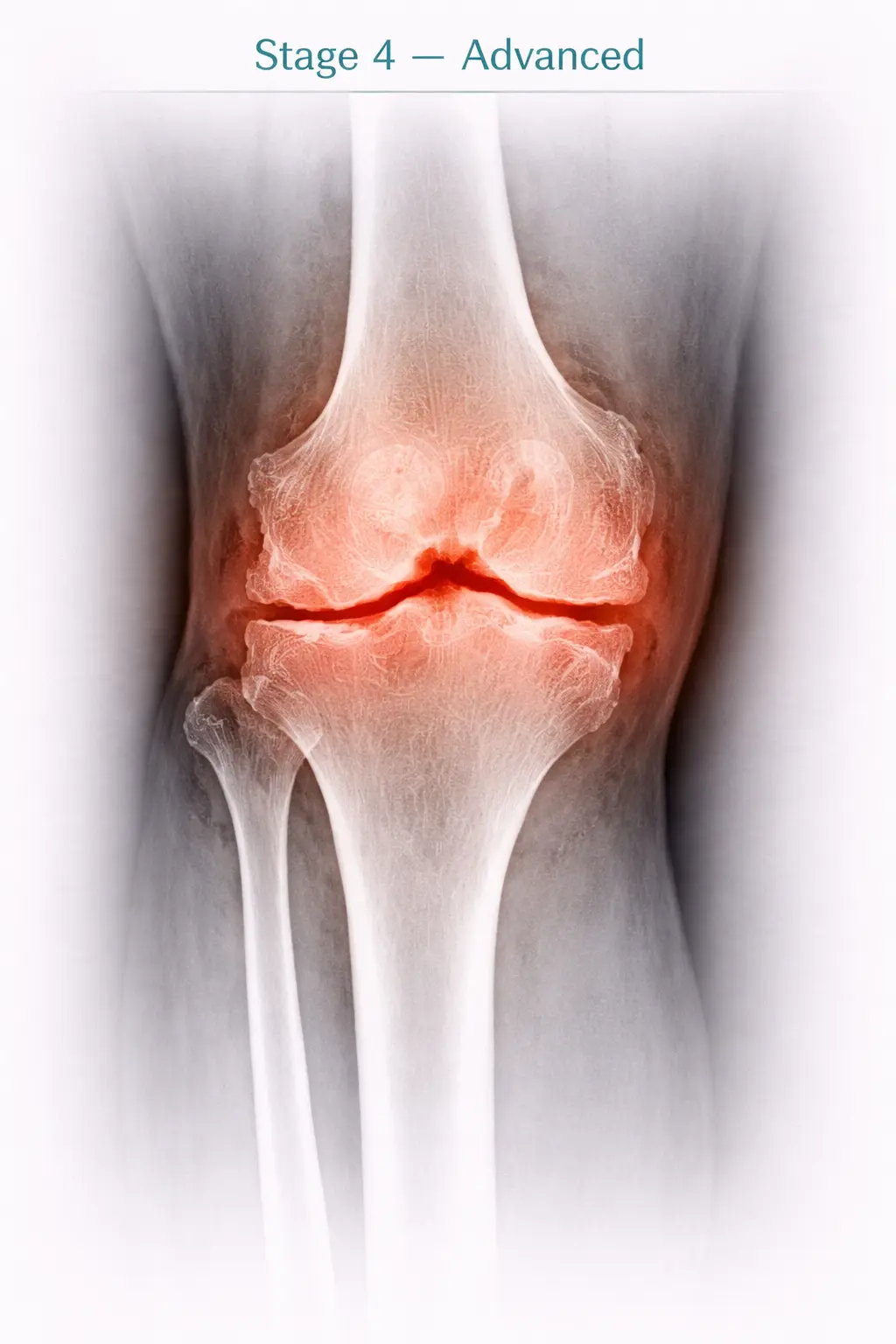
Stage 4
Symptoms
- Waddling gait due to inability to take load on limb
- Difficulty in activities of daily living (ADL)
- Can't sit on the ground with crossed leg
- Avoid going out for socialization just due to pain
- Bent legs
“While going to meet relatives, a thought comes to your mind that whether he stays on ground floor or higher & would need to climb stairs which may force to avoid going there.”
X-ray Findings
- ‘Zero Space’ — Bone on bone appearance
- Rough articular surfaces — Totally lost joint — Subluxation of joint
Know the Causes
Causes of Osteoarthritis of Knee
Understanding the root causes helps in both prevention and choosing the right treatment path.
Degenerative Changes with Age
Natural wear and tear over time. As we age, the cartilage in our joints gradually deteriorates, leading to reduced cushioning and increased friction between bones.
Urbanization & Lifestyle Changes
Increased stress and fast life have taken a toll on our bodies. Problems once seen at the age of 65–70 years are now being seen at 45–50 years — just like heart attacks are occurring earlier due to modern lifestyles.
Lack of Exercise
Every person should do a minimum of 40 minutes of exercise daily. Without exercise, muscles weaken, more load falls on the joints, and wear occurs faster.
“After forty, if you don’t walk forty minutes, you won’t walk anywhere.”
Obesity
Excess body weight places enormous stress on weight-bearing joints, accelerating cartilage breakdown. Check your BMI:
<25
Normal
25–30
Overweight
>30
Obese
>40
Morbidly Obese
Calcium, Vitamin D3, and Protein Deficiency
Nutritional factors contributing to bone weakness. Adequate calcium, vitamin D3, and protein intake are essential for maintaining strong bones and healthy joints throughout life.
Varus Deformed Legs
Inturned legs (bow legs) put uneven pressure on the inner side of the knee joint, causing the medial compartment cartilage to wear out faster than normal.
Previous Trauma or Surgery
Prior knee injuries, fractures, or operations can alter the joint mechanics and accelerate the onset of osteoarthritis in the affected knee.
Your Options
Treatment Options for Osteoarthritis Knee
Treatment depends on the stage of arthritis. Here are the seven options, from conservative to surgical.
Lifestyle Modification
- Regular walk
- Regular muscle stretching & strengthening exercise
- Minimum 40 minutes daily
Body Weight Control
With proper diet and exercise, maintain a healthy BMI (under 25). Every kilogram of excess weight puts additional stress on your knee joints, accelerating cartilage wear.
Medicines (NSAIDs)
Necessary during acute pains to provide relief so you can exercise better. Once the pain is controlled and exercise becomes routine, medicines are stopped.
“PAIN KILLER” IS AN OVERRATED WORD
Long-term use of NSAIDs may cause gastritis and chronic renal failure. These medicines should only be used short-term to facilitate exercise and recovery.
Knee Caps / Braces
- Cap with plastic hinges and Velcro straps for support
- Valgus braces for more inturned knees
- Beneficial for Stage 1 to Stage 3
Lubricant Injection — SFRT
Synovial Fluid Replacement Therapy (SFRT) replenishes the natural lubricant in the knee joint, reducing friction and pain. This is a non-surgical option that can provide significant relief.
Learn more about SFRTIntra-articular Steroid Injection
For patients who can’t or won’t go for an operation, steroid injections can provide relief by reducing inflammation and swelling inside the joint. This is typically used as a palliative measure.
Joint Replacement
For Stage 4 when all conservative treatments have been exhausted. Joint replacement is one of the best inventions of the 21st century, giving patients a new lease on life and mobility.
Learn about CLS Technique Joint ReplacementDon’t Delay Your Treatment
“Carry on with whatever it is, bear till you can, this is age related...” — This common attitude leads to unnecessary suffering. Arthritis is progressive. The earlier you seek treatment, the better the outcomes and the more options available to you. Don’t wait until the pain controls your life.
Understanding the Cycle
Breaking the Pain Cycle
Treatment transforms the vicious cycle of pain into a virtuous cycle of recovery.
Before Treatment
The Negative Cycle
Severe Pain
Decreased Walking
Increased Stiffness
Severe Pain
After Treatment
The Positive Cycle
Less Pain
Increased Walking
Decreased Stiffness
Less Pain
Our Treatments
Explore Our Treatment Options
Learn more about our specialized treatment procedures and how they can help you.
Knee Joint Replacement
CLS Technique — sit cross-legged after surgery.
Learn moreLubricant Injection (SFRT)
Non-surgical joint lubrication therapy.
Learn moreHip Replacement
Advanced hip replacement surgery options.
Learn morePediatric Health
Comprehensive children’s healthcare services.
Learn moreDon’t Delay, Consult Dr. Jigar Shah Today
Early treatment gives the best results.
Have Questions?
Frequently Asked Questions
What are the stages of knee arthritis?
Knee arthritis progresses from mild cartilage wear with occasional stiffness, to moderate joint-space narrowing with recurring pain, to severe arthritis where bone-on-bone contact causes persistent pain and reduced mobility. Treatment options change at each stage.
What causes knee arthritis?
A combination of age-related cartilage wear, excess body weight, genetics, previous injury, and long-term joint overuse. Managing weight and activity can slow progression in earlier stages.
Do I need knee replacement surgery, or are there other options first?
Not necessarily right away. Early and moderate arthritis is often managed with weight management, physiotherapy, medication, and SFRT (lubricant/viscosupplementation injections) — which has helped 400+ patients at Shaurya Hospital delay or avoid surgery. Joint replacement is recommended once these options stop relieving pain or restoring function.
What is SFRT and who is it suitable for?
SFRT supplements the joint's natural lubrication to reduce pain and improve movement in early-to-moderate knee arthritis. It has helped patients aged 35–81 at Shaurya Hospital who aren't yet ready for, or don't need, joint replacement.
How long does recovery take after knee replacement surgery?
Most patients are discharged within 3–5 days, with a structured physiotherapy plan guiding a fuller return to daily activities over the following weeks.